🦺 "Ambassadors" pilot brings extra TLC to beleaguered Lake and Minnehaha area
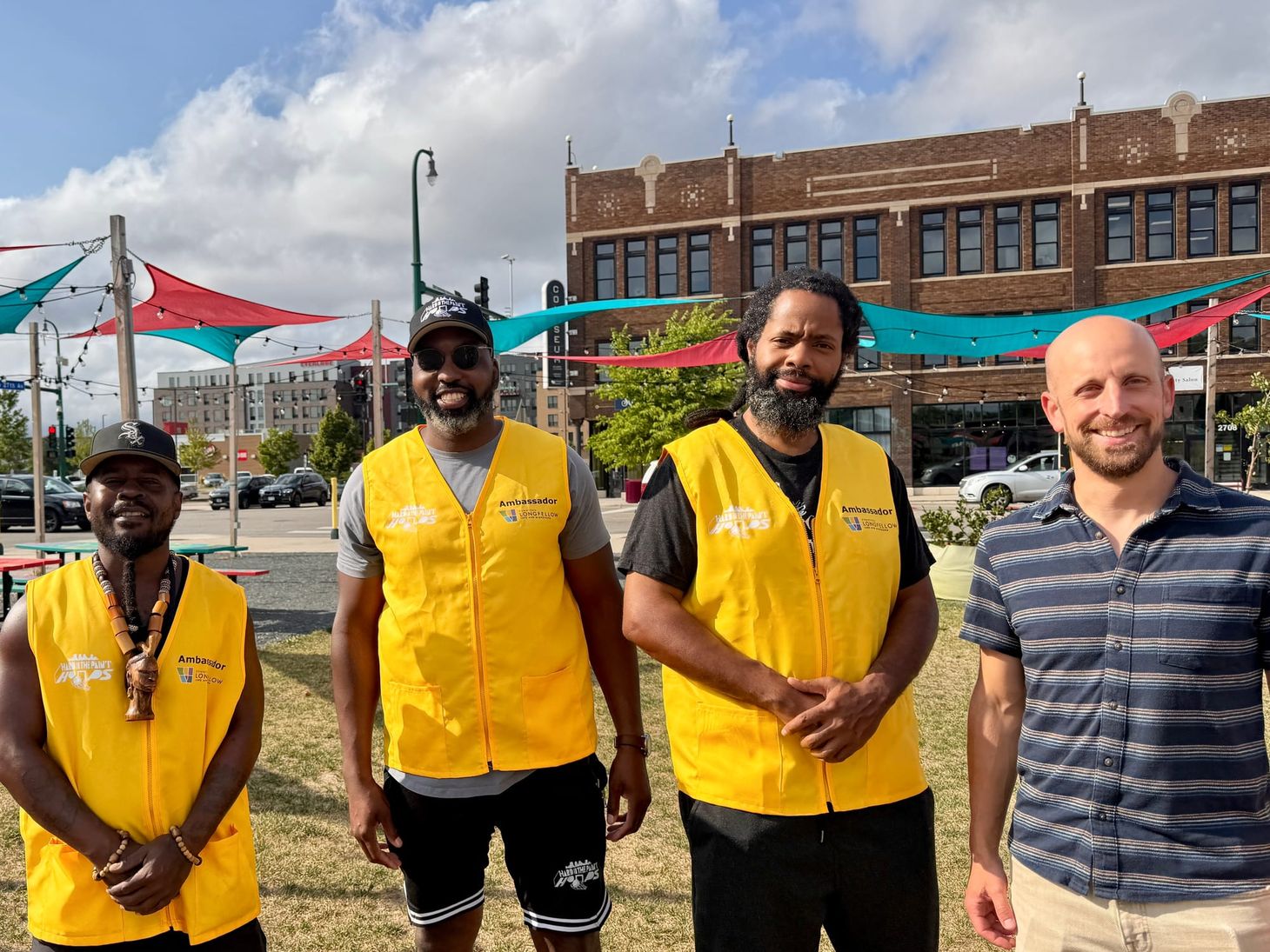
Groups of yellow-vested ambassadors have been working the area around Lake and Minnehaha since July, hoping a friendly presence can put a dent in the rise of antisocial behavior in the area.
Note: This story is free for everyone. For access to everything else, become a subscriber.
Groups of yellow-vested ambassadors have been working the area around Lake and Minnehaha since July, hoping a friendly presence can put a dent in the rise of visible drug use and antisocial behavior around the intersection. The Clean and Safe Ambassadors program is in the midst of a three-month trial run, which organizers hope can provide enough results to land a permanent funding source next year.
Background
Justin Ley moved his Reema Health company into the Historic Coliseum building last summer, a win for owners of the building that had struggled to attract larger tenants since an expensive restoration the year prior.
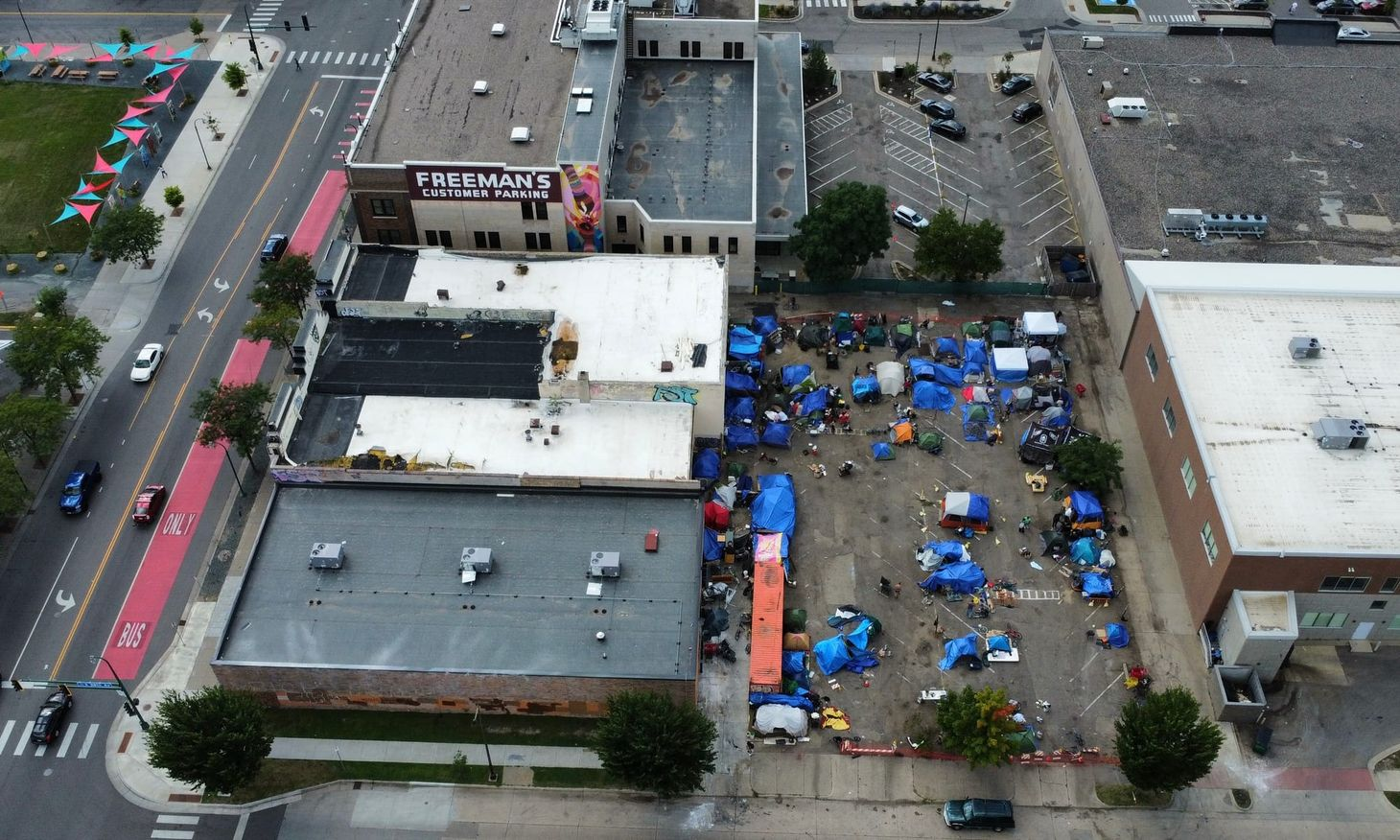
The move coincided with the growth of an encampment behind the neighboring building, which would ultimately end in a deadly mass shooting in September. Many employees' first impression of their new workplace involved walking through groups of drug users and rousing people in their doorway. For the 50 Reema staff at the Coliseum, who provide mental and behavioral services to low-income Medicaid patients, the situation generated a mix of sympathy, discomfort, and frustration — especially as a heated debate emerged over the appropriate response to the encampment.
That’s a familiar swirl of feelings for many who live and work near the intersection sometimes referred to as “Downtown Longfellow,” which has seen a visible uptick in drug use and crime in the years since many of its key buildings were destroyed in 2020. People with a daily front-row seat to the suffering and deprivation in the area often feel sympathy, guilt, and a desire to help, especially as they build personal connections with the few dozen unhoused people who frequent the area. At the same time, the often-erratic and sometimes-threatening behaviors on display materially impact business and basic quality of life. Solutions to the challenge feel as dauntingly complex as they are politically and emotionally charged.
Looking for a practical near-term solution, Justin contacted Max Musicant, a consultant who specializes in ambassador and district-improvement programs meant to stabilize and bring life to troubled areas. Max, who lives a few blocks away and sends his kid to Bright Prospects preschool near the intersection, put together a sample plan of what such a program could look like in Longfellow.
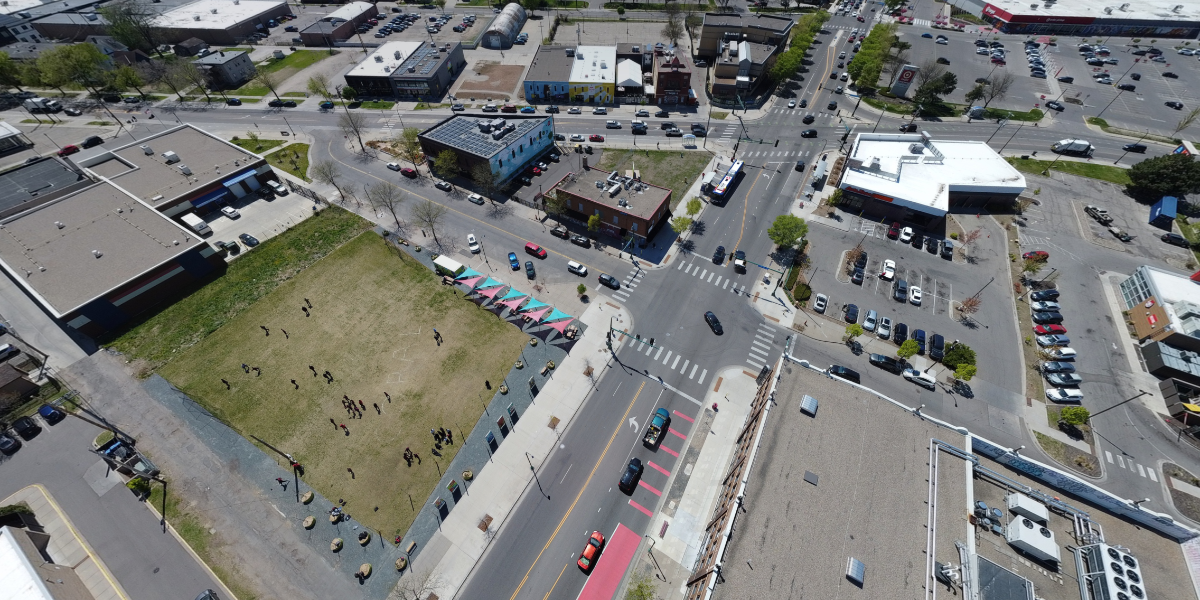
His proposal for Lake and Minnehaha included hiring staff to clean the area daily and to spend five days a week circulating the district, building relationships and monitoring behavior. It also included investments in new equipment at the El Nuevo Campo park — a recently-renovated open space in the center of the area in question — and events to bring more positive activity to the area.
The concept of non-police public safety programs has gained local traction in the years since officer Derek Chauvin’s murder of George Floyd. This year the city budgeted more than $5 million on “violence interrupter” programs that contract with groups of street-savvy and locally-connected staff to patrol sensitive areas, providing an official presence and aiming to de-escalate tensions before they turn violent. It also launched a pair of city-run “community safety ambassador” programs along Franklin Avenue and East Lake Street with similar aims. (The East Lake program only operates west of Hiawatha.) In downtown Minneapolis and St. Paul, nonprofits operate “downtown improvement districts” that focus on cleanup and wayfinding assistance. Max’s firm operates a separate ambassador program in St. Paul’s Kellogg Park.
Securing funding for such programs is often slow, if it happens at all. The city council assigned funding in the 2025 budget for safety ambassadors at Lake and Minnehaha, and at 46th and Hiawatha, but neither program was implemented. In Uptown, an ambassador program originally funded in 2024 only just launched this spring. The downtown improvement districts each required forming a nonprofit and persuading property owners to opt into a special tax assessment.
Rather than wait, Max and Justin led efforts to raise funds on their own to launch a three-month test run of an ambassador program, hoping the results will generate momentum to establish a permanent operation. They set a goal of $90,000 and ultimately raised around $60,000, enough to fund the core group of ambassadors but requiring some cuts to planned events and amenities. The pilot received $40,000 from the Minneapolis Foundation and additional contributions from Arbeiter Brewing, Bokers Inc., Holy Trinity Lutheran, Lake Street Council, Longfellow Business Association, Longfellow Rising, Moon Palace Books, Redesign, Reema Health, S.H.A.K.E. at the Coliseum, and Two Bettys Green Cleaning.
Clean and Safe Ambassadors
Max contracted with the group Hard in the Paint Hoopz to staff the pilot program. The youth engagement group, which also works with Max on a similar project on the east side of St. Paul, is led by South High grad Ibrahim Oduniyi and program manager James Mullins, outreach veterans who previously led a downtown program targeted at young adults.
From Wednesday to Sunday, two or three contracted ambassadors are on duty from 3 p.m. to 8 p.m. They have four main tasks:
Cleanup: The ambassadors carry a trash picker and garbage bag as they make their rounds, picking up a formidable amount of litter and needles each day. Someone also cleans the area on the two days a week when ambassadors aren’t on duty.
Relationships: The logic of the program rests on the idea that people will behave better if they know someone is observing — especially if it’s someone they’re friendly with. Ambassadors spend much of their shift talking to the few dozen people who frequent the area, while also checking in with business owners along the route. They emphasize that they’re not shooing people away from the area; their stated mantra is, “All people are welcome, but not all behaviors are welcome.”
Ambassadors also provide bottled water and granola bars to park users and can connect people to social services. (An unrelated group called the Downtown Longfellow Mutual Aid Hub hosts recurring events to distribute food and supplies at the park, and is lobbying the city to get a permanent water station installed there.)
Discourage negative behavior: The most common complaint from people who live and work in the area is visible drug use — especially when it’s via needles — and the erratic behavior that sometimes follows. (Violence and property crimes are less common, but perhaps of greater concern.) Much of the drug use appears to trace back to the parking lot of developer Hamoudi Sabri’s vacant building next to the Coliseum, where an open storage container facilitates a round-the-clock marketplace. Afterward, many customers migrate to the park across the street to use.
The ambassadors won’t physically attempt to stop someone from using drugs. Unless things get violent, they usually won't call the police, either. Instead, their strategy basically boils down to a polite request.
“I tell the patrons — I can’t make you do anything,” Ambassador Donnell Green says. “The best I can say is — just don’t do that here. You’re welcome here. But just don’t do things that keep other people from enjoying the space.”
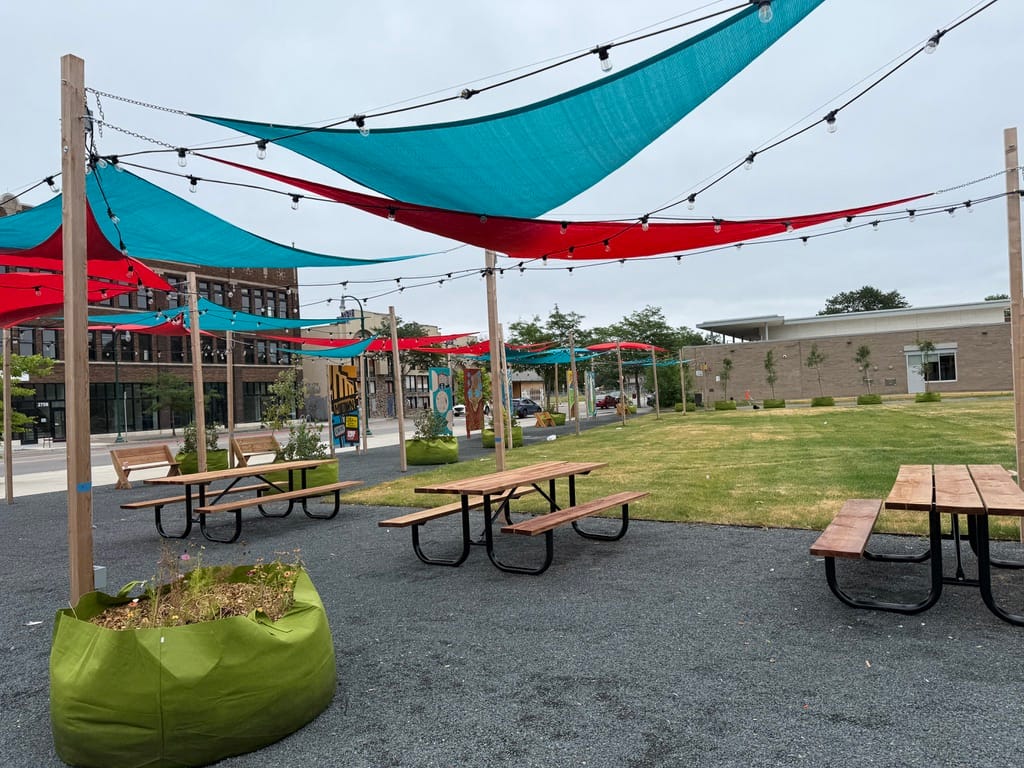
Caretaking the park: The group bases its operation and stores its equipment at El Nuevo Campo, where a one-time state grant funded the transformation of a vacant lot into a spiffy green space, with a soccer field, picnic benches, sun sails, and art. (Local businessman Wilmar Delgado is pursuing an affordable housing development there, though that is likely years away from breaking ground.) Besides picking up the substantial refuse that accumulates in the space each day, the ambassadors also set up the modest activities on the site and help out with events.
Of course, deterring negative behavior only goes so far. To make a lasting improvement, Max says, the area needs more people using it for positive reasons. Part of the program’s funding goes to a part-time marketer to advertise the district as a destination. The group is pursuing some additional funding to host events and add new amenities — wishlist items include a ping-pong table and off-leash dog park — to the area.
The future of the program
In the program's first month, the group reported picking up 94 bags of trash and enough needles to fill two sharps containers. They're surveying users to track feelings of safety and keeping count of how many families use the park.
The program is funded from July through September at a cost of about $20,000 a month. After it ends, the group hopes to pursue establishing a “business improvement district” in that area, which would fund the program through a tax assessment on property owners within its boundaries. At least a quarter of property owners in the area would need to approve the assessment — and not more than a quarter could object. Property owners along Longfellow's stretch of Lake Street already pay a special assessment for an “East Lake special services district” that provides sidewalk garbage cans, plantings, graffiti removal, and other aesthetic upkeep.
Alternatively, they could seek city funding for the program. Mayor Jacob Frey’s proposed budget for next year cuts funding for violence prevention groups but expands it for city-employed safety ambassadors. Or, the city could expand the existing East Lake ambassadors pilot east to include the downtown Longfellow area — though this request has been previously denied.
There won’t be funding lined up by the time the pilot expires next month, so any new work would likely resume next spring. (Visible drug use and antisocial behavior typically decrease during the winter.) For now, you can follow along on the group’s social media, or say hello to an ambassador on Wednesdays-Sundays from 3-8 p.m. People interested in safety in the area can also attend the monthly Downtown Longfellow Safety Meeting at Holy Trinity Lutheran. The next meeting is September 14.