[Private draft]: Paul Ferguson's 50th season at Minnehaha Falls Dairy Queen
![[Private draft]: Paul Ferguson's 50th season at Minnehaha Falls Dairy Queen](https://storage.ghost.io/c/91/b1/91b19b49-6343-4873-9273-3258ed105760/content/images/size/w1460/2026/05/0B737AAE-9A9D-445E-A7E3-2D5069161E0A_1_105_c.jpg)
In 1973, 13-year-old Paul Ferguson's family moved from Franklin Avenue to Nawadaha Boulevard, the frontage road that separates the neighborhood from Minnehaha Park.
It was an idyllic place to be a kid. He spent afternoons exploring the vast regional park. He and neighbor buddies would hit golf balls in the broad grassy boulevard between Nawadaha and the Parkway, which, in those days before the parkway was reconfigured, was big enough to host an official full-size football field. And in the warmer months, he'd participate in that ultimate rite of summer, venturing the two blocks to Dairy Queen for a frozen treat.
Three years later, as a 16-year-old at Roosevelt High, his friend helped him get his first job there, making $1.61 an hour. He never left.
This year marks Paul's 50th season at the Minnehaha Falls Dairy Queen, now as the store's operator. He works seven days a week, all season, usually at the register. And he could retire, but he just likes it there too much.
Background
In the postwar 1940s, an upstart Illinois chain called Dairy Queen was expanding rapidly across the country, peddling an airy, lower-dairy version of ice cream they dubbed "soft serve."
Minneapolis couple Burton and Virginia Myers began opening franchises across the Twin Cities. In 1948, they bought a small gas station kitty-corner from Minnehaha Falls Park and renovated it into a standard walk-up DQ. As far as this newsletter writer can tell, that makes it third to only Soderbergs Florist and the Schooner Tavern as Longfellow's oldest consumer business, beating out the Riverview Theater by a few months. (The 44th and Lake location opened a year later, operated by another big-time DQ franchisee, Lorraine Dale, who ran her company from the office building behind the store.)
The Myers would play a key role in the future of Dairy Queen, later leading a group of investors to buy out the founding family and move the international corporation's headquarters to Minneapolis. Burton became chairman of the board, and later his son, Miller, would serve as CEO.
Meanwhile, Burton's daughter Martha, and her husband Doug Head, operated the family's portfolio of franchises in the Twin Cities. (They also led the development of Uptown's Calhoun Square.) Doug, who served as Minnesota Secretary of State, passed away in 2002; Martha still owns the Minnehaha Avenue location, the family's last remaining franchise.
By the 70s, the Head family had stopped directly operating their franchises, and instead leased them out to an operator who shared in the profits. Karl Tittl was the longtime operator who hired Paul in 1976. He took a particular shine to the hard-working young cashier and, when he became ill eight years later, recommended the then-24-year-old as his successor.
Though Paul had seen the toll that the long hours had taken on his former boss, he regarded it as an easy decision — he'd already spent his whole young adulthood there, college wasn't panning out, and he'd taken to the lifestyle of having winters off. The Head family agreed to take a flyer on the young operator, and Karl helped him finance the deal.
In his first year, 1984, Paul worked from open-to-close every day of the season, more than 100 hours a week. He's slowed down since, but not by much.
DQ by the falls
A lot has changed around the store in Paul's half-century tenure.
For one, the roads: The conversion of Hiawatha Avenue from a standard city street into a highway created a foreboding barrier for customers to the west and made directions to the store a lot more complicated. Later, the highway was tunneled under Minnehaha Parkway, taking the store out of view from Hiawatha traffic. Nawadaha Boulevard, which had previously connected the store directly to Hiawatha and the Ford Bridge, was capped with two cul-de-sacs.
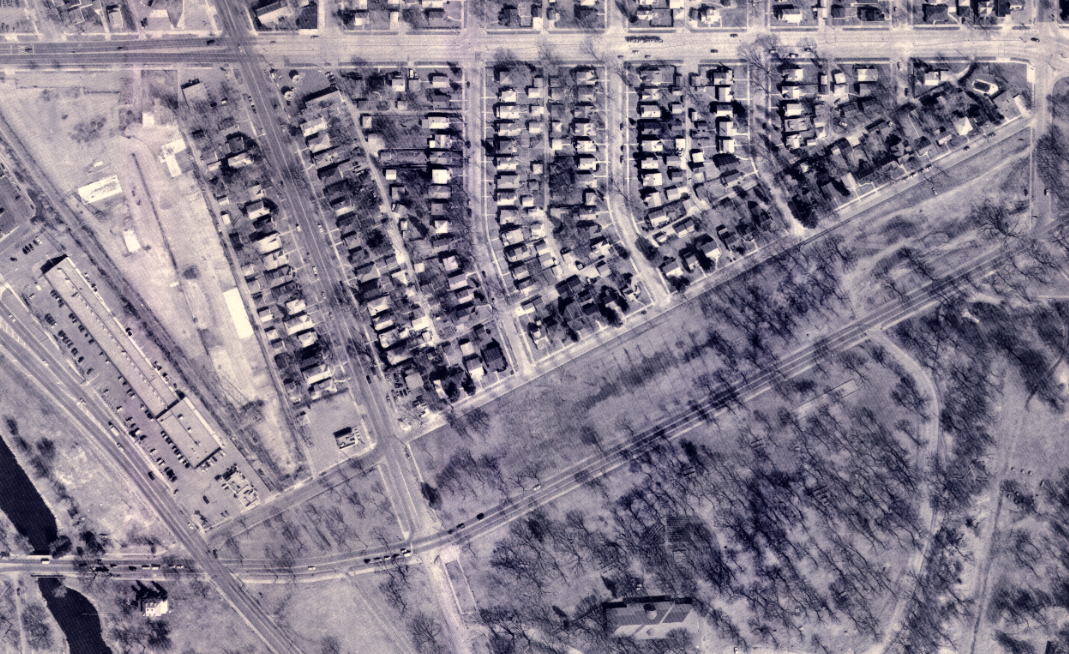
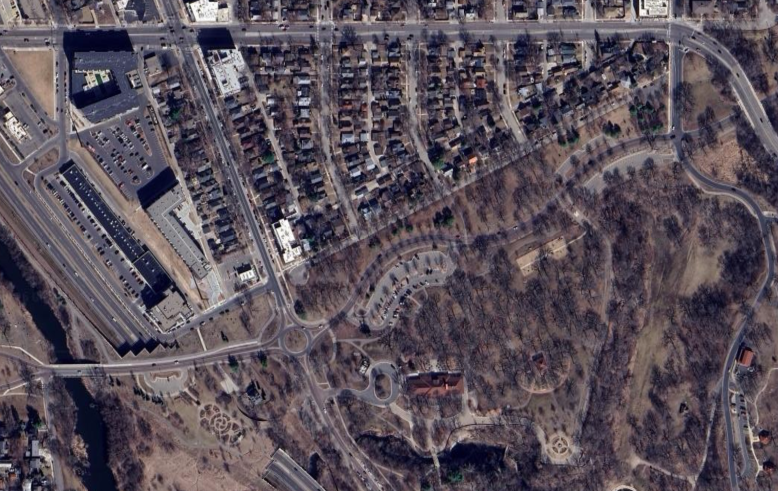
The area in 1993, and today, after the tunneling of Hiawatha and the reconfiguration of Nawadaha Boulevard and Godfrey Parkway
The surrounding area would undergo significant changes a decade later, as apartment complexes began to replace most of the area's light industrial lots, adding thousands of new residents within a few-minute walk.
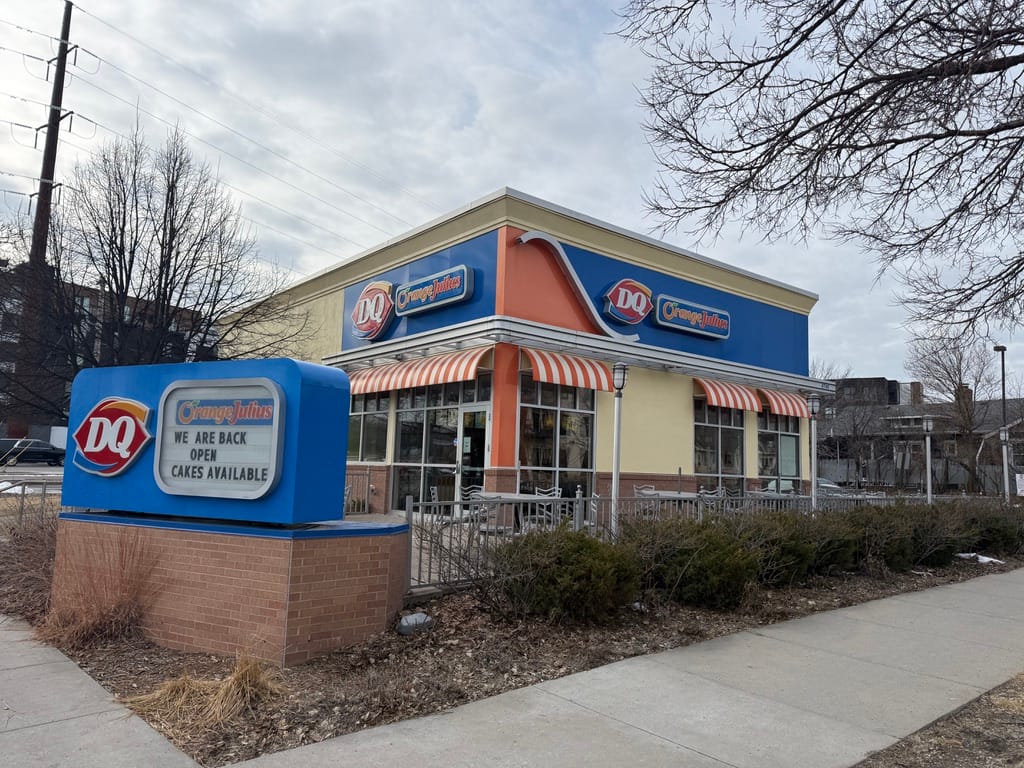
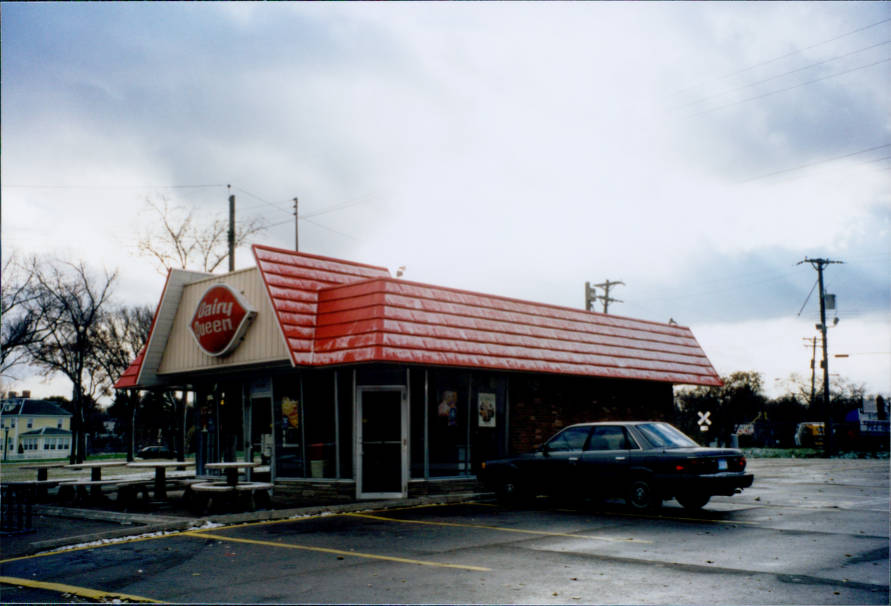
The building's different, too. The walk-up window was eventually enclosed into a small indoor ordering area. After the 2009 season, the location was rebuilt into a larger storefront that nearly doubled its capacity.
But what hasn't changed is the enduring draw of Minnehaha Falls, which attracts about 850,000 visitors a year and remains the engine of the business. On a nice summer weekend, Paul will have as many as a dozen staff cranking out cones and blizzards to keep up with demand. The difference between rain and shine is massive, and requires him to be a forecaster of sorts, obsessively tracking the radar to predict a day's staffing needs.
The store always opens a week before Valentine's Day, no matter how wintry the weather, because it's a big day for the ice cream cakes they make in-house. (That gives it about a month headstart on the East Lake and other walk-up locations.) It's often just him in the store during the slow daytimes of the early spring.
Though he was able to take weekends off for years as he was raising his own family, Paul's back to working seven days a week these days. He's chatty, with a big smile and bellowing laugh, and likes that the work keeps his mind and body active. Though his former mentor warned him he might eventually get sick of the teenagers he employs, that hasn't happened yet; it's still a treat to watch them develop, especially since some of his earliest hires are now of retirement age themselves. And, for the grandfather of _____, the timeless enthusiasm of young customers remains the job's greatest pleasure.
His current lease runs for another ___ years, at which point he'll be ___ and will probably, finally, leave his first job. Until then, you can look for him at the Minnehaha Dairy Queen. There's a good chance he'll be there.